
Simple may not always mean affordable.
It’s a familiar reaction: you come across a home that looks clean, minimal, and almost understated… then realise the renovation costs more than $100,000.
No feature walls, no bold colours, no obvious ‘wow’ factor. So what exactly is driving the cost?


As it turns out, simplicity in design doesn’t always mean simplicity in execution. We spoke to Johnson from Happe Design Atelier to break down where the money really goes in these seemingly “simple” renovations.


What are the estimated costs of essential renovation works?
Before any design decisions come into play, a large portion of a renovation budget is typically spent on what Johnson describes as the “bones” of the home. This is especially true for resale flats, where hidden wear and tear often needs to be addressed upfront.

View this project by Happe Design Atelier
“The true foundation of a renovation lies in infrastructure and wet works, which ensures that the home is safe and functional” Johnson explains. “For a 4-room resale flat*, it typically adds up to around $60,000 to $80,000 depending on the age and condition.”
*As a point of reference for the purposes of this article, given that older resale units typically require more foundational works.

Essential works like wall hacking/rebuilding and plumbing can set homeowners back by a substantial amount, depending on the flat’s condition.
Breaking it down further, here’s an estimated breakdown of various essential works homeowners can expect in a 4-room resale flat:
| Essential Work | Estimated Cost |
|---|---|
| Structural re-layout (wall hacking & rebuilding) | $10,000 – $20,000 |
| Electrical rewiring | $8,000 – $15,000* |
| Plumbing (repiping, waterproofing, water ponding test) | $6,000 – $8,000 |
| Large-format tiles | $5 – $15 psf |
| Regular 60x60 tiles | $3 – $4 psf |
| Hacking of existing tiles | Single layer: $4 psf Double layer: $6 psf |
| Retiling for 60x60 tiles (including materials like 2-in-1 floor screed) | $3 – $4 psf |
| Tiling labour | 60–75% of tile cost |
| Plastering works | $5,000 |
| False / partition ceiling works | $10,000 – $15,000 |
*This figure is typically not included in the initial quotation as IDs will need the homeowners to confirm placement of powerpoints, etc before getting an electrician to provide a quote.
1. The biggest costs in a renovation are often the things you can’t see
Before factoring in carpentry, materials, or design features, renovation costs can already add up quickly.
And that’s often where expectations start to diverge. What looks like a “simple” home on the surface may already have tens of thousands of dollars invested in groundwork that you don’t immediately see.

View this project by Happe Design Atelier
Much of this comes down to where the money is actually going. A significant portion of the budget is spent on work that sits behind walls, beneath floors, or within ceilings, ensuring the home is structurally sound and fully functional.
Because these upgrades aren’t immediately visible, they can create the impression that not much has changed, even when extensive work has been done.
So when a finished home looks clean, minimal, and relatively understated, it’s not necessarily a reflection of how little was spent, but how much of the work was intentionally kept out of sight.
 Find IDs
2. “Simple” designs often rely on higher-quality materials

View this project by Happe Design Atelier
Minimalist homes tend to avoid heavy detailing or decorative elements. Instead, they rely on materials to carry the space, which means finishes need to look refined up close, not just from afar. This means homeowners are more likely to opt for better materials to achieve the desired look.

View this project by Happe Design Atelier
“Large-format tiles, plastering works, false or partition ceiling works (especially with curved or organic treatments), higher-tier sintered or natural stone, as well as limewash or textured paint are commonly used in minimalist homes,” Johnson says.
“Materials and finishes, like anti-fingerprint laminates for example, often come at a premium despite appearing subtle,” he adds. “They also require more precise installation or workmanship, which incur significantly higher labour costs.”
3. Achieving visual simplicity often requires more carpentry
In many simple-looking homes, what you don’t see is just as important as what you do.
Clean lines, clutter-free spaces, and uninterrupted surfaces are often made possible through built-in carpentry, from full-height wardrobes to concealed storage and flush feature walls. It’s also worth noting that carpentry typically makes up the largest portion of renovation costs.
But achieving this level of visual simplicity is rarely straightforward.

View this project by Happe Design Atelier
“The most expensive carpentry works involve bespoke joinery and complex technical profiles, such as mitered joints, shadow gaps, and organic, curved forms,” Johnson says.
“These details require a high level of precision and significantly more labour to execute properly. On top of that, the use of premium laminates and integrated hardware mechanisms further adds to the cost,” he explains.
4. Small details add up faster than homeowners expect
Beyond major works and carpentry, renovation budgets often creep up through a collection of smaller design elements.
Individually, these may not seem significant. But when layered together, they can add a substantial amount to the overall cost.
As Johnson points out, this is especially common in resale units, where existing structural constraints need to be addressed. “To achieve a certain look, homeowners will often opt to conceal irregular beams, columns, and exposed sewage piping,” he explains.

Box-ups, trunking, and curtain pelmets are small details that can add up and push your renovation budget.
“In addition, integrating functional details like box-ups, curtain pelmets, and smart home systems can add $10,000 to $30,000 to the budget, depending on the complexity of the concealment and the level of automation required,” Johnson adds.
5. Layout changes can trigger a domino effect of costs
One of the biggest drivers behind higher renovation costs may be layout reconfigurations.
Structural re-layout, including hacking and rebuilding walls, forms a core part of many renovations. But what homeowners often don’t realise is how one change can quickly affect multiple parts of the home.

View this project by Happe Design Atelier
What starts as a single decision, such as opening up the kitchen or relocating a sink, can set off a chain reaction, from rerouting plumbing and adjusting electrical points to redoing flooring and modifying carpentry plans.
Each of these changes comes with its own cost, but more importantly, they stack.
This is why homes with reworked layouts can end up costing significantly more, even if the final design looks clean and relatively simple. The visual result may feel minimal, but the amount of work required to get there is anything but.
How to achieve a minimalist look without overspending
For homeowners drawn to clean, minimalist interiors, the key isn’t to cut back across the board, but to be more intentional about where the budget goes.
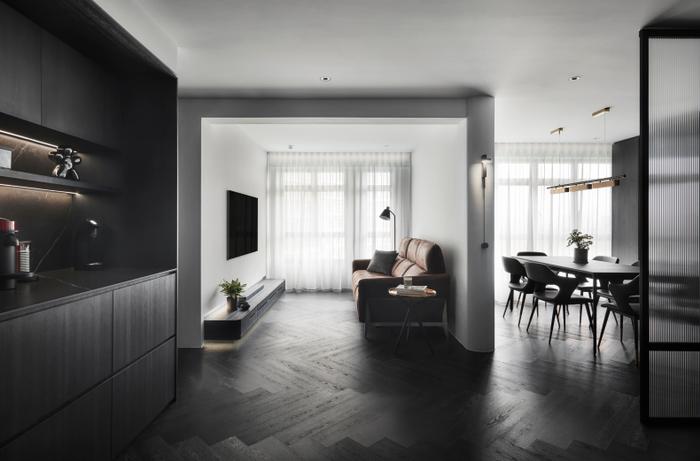
“To achieve an affordable minimalist look, homeowners should adopt a ‘needs vs. wants’ mentality by prioritising the budget for high-traffic areas like the living room and bathrooms,” Johnson says, advising homeowners to focus their budget on areas with the most visual and functional impact.
View this project by Happe Design Atelier
One way to manage costs is by being selective with built-ins. Instead of committing to carpentry throughout the entire home, homeowners can opt for loose furniture in less prominent spaces, such as the study or yard, while investing in more refined finishes where it matters most.
Johnson also shares a simple rule of thumb: “Spend 80% of your aesthetic budget on the 20% of the home where you spend the most time.”
Simple-looking homes may feel effortless, but getting there rarely is.



 Get a budget estimate before meeting IDs